
For 93 years Arsenal played at Highbury, a small and elegant stadium in a quiet North London street. It had marble halls and art deco stands, but only about 38,000 seats. To compete with the biggest clubs in Europe, Arsenal had to move. They did not go far: the new stadium stands just a few hundred metres away.
From a waste plant to a stadium
At the end of the 1990s Arsenal looked at many options, even buying Wembley. In the end the club chose Ashburton Grove, an industrial estate with a waste-processing plant, close to Highbury. The plans for a stadium with about 60,000 seats went to the council in 2000 and were approved in December 2001.
The architects were HOK Sport, today known as Populous, and the builder was Sir Robert McAlpine. The project was not easy. In 2003 work stopped because the funding was late, and it only started again in 2004. The final cost was about £390 million - a huge amount for a club at that time, and one reason why Arsenal had to be careful with money for years after the move.
A new name
During construction everybody called the stadium "Ashburton Grove". In 2004 the airline Emirates bought the naming rights as part of a large sponsorship deal, and the Emirates Stadium was born. The deal has been extended several times since. In UEFA competitions, where sponsor names are not allowed, it is simply "Arsenal Stadium".
Opening day with Bergkamp and Ajax
The first match was a special one. On 22 July 2006 Arsenal played Ajax in the testimonial of Dennis Bergkamp, the Dutch master who had played at both clubs. The first competitive match followed on 19 August 2006, a 1-1 draw against Aston Villa. Prince Philip officially opened the stadium in October of that year.
A bowl with four tiers
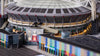
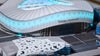
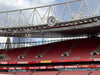
The Emirates is a smooth bowl with four tiers, wrapped in glass and steel. The roof covers only the seats and rests on four large triangular steel trusses, so the pitch gets enough light and air. Around the stands there are about 150 boxes and a full ring of club seats. Today the capacity is 60,704, all seated.
Bringing Highbury home
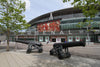
When it opened, some fans felt the new stadium looked too neutral. So in 2009 Arsenal started a programme called "Arsenalisation". Large murals of club legends now wrap around the outside, cannons decorate the seats and the walkways, and statues of Herbert Chapman, Tony Adams, Thierry Henry and Dennis Bergkamp stand outside. The famous clock from Highbury came along too - that is why the south stand is still called the Clock End. Highbury itself was turned into apartments, and its old pitch became a garden.
Records and big nights
The stadium has hosted Brazil friendlies, concerts by Bruce Springsteen and Green Day, and a semi-final of the 2022 Rugby League World Cup. In April 2023 more than 60,000 fans had already come for a Women's Champions League semi-final against Wolfsburg. In February 2024 Arsenal Women played Manchester United in front of 60,160 people, a record for the Women's Super League.
And in 2026 the wait was finally over: Arsenal won the 2025/26 Premier League, the club's first league title since the "Invincibles" of 2003/04 - and the first in the Emirates era.
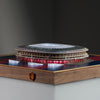
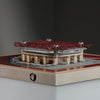
The Emirates in miniature
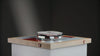
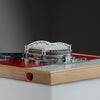
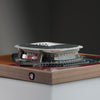
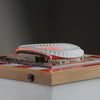
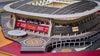
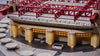
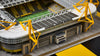
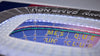
This is one of the most detailed models in our collection. We rebuilt the curved bowl, the roof on its big trusses and the iconic clock, all at ant scale. With the mini-LEDs on, it is a North London night match on your shelf.