Some stadiums are famous for their roof, some for their façade. The home of Borussia Dortmund is famous for one stand. Twenty-five thousand people standing shoulder to shoulder, all in yellow, singing for ninety minutes: the Yellow Wall. But the story of the stadium starts with a lucky break and a tight budget.
A World Cup by accident
In the 1960s BVB played at the Kampfbahn Rote Erde, a small ground with an athletics track. The city talked for years about a new stadium, but there was no money. Then West Germany got the 1974 World Cup. When Cologne withdrew as a host city in 1971, Dortmund received its share of the funds.
The first plan was an oval stadium with a running track for 60,000 people. It was too expensive. In its place came a cheaper and smarter idea: a stadium only for football, built from prefabricated concrete parts, with four straight stands close to the pitch. The Westfalenstadion opened on 2 April 1974 - right next to the old Rote Erde, which still stands today.
1974: Cruyff in Dortmund
Only a few months after opening, the stadium hosted four World Cup matches. Scotland beat Zaire, and on 3 July 1974 the Netherlands of Johan Cruyff beat Brazil 2-0 to reach the final. For Dutch football fans, Dortmund has been a special place ever since.
Borussia itself was in the second division when the stadium opened. The club was promoted in 1976, and the Westfalenstadion became one of the loudest places in the Bundesliga.
Growing step by step
The original stadium held about 54,000 people, mostly standing. In the 1990s, with BVB winning titles, it grew in stages. Upper tiers were added to the east and west stands in 1995 and 1996, and the north and south stands followed in 1999. Between 2002 and 2003 the corners were filled in. Eight bright yellow pylons now stand outside the stadium and carry the roof, so no pillars block the view inside.
Today the stadium holds 81,365 fans, more than any other in Germany. In some seasons Dortmund has had the highest average attendance in all of European football.
The Yellow Wall
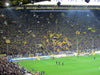
The heart of it all is the Südtribüne, the south stand. It has 24,454 standing places, which makes it the largest standing terrace in European football. On a match day it is a wall of yellow and black, with flags, scarves and choreographies that cover the whole stand. Opposing players often say the sound hits them as soon as they walk out of the tunnel.
The stand is also a place of rituals. Before kick-off the whole terrace sings "You'll Never Walk Alone", and after a home win the players walk to the Südtribüne to celebrate with the fans.
A new name, the same stadium
Since December 2005 the stadium carries the name of the insurance company Signal Iduna. Fans still say "Westfalenstadion", and during the 2006 World Cup FIFA called it the "FIFA WM-Stadion Dortmund". In UEFA matches it is the "BVB Stadion Dortmund".
Big nights
The stadium hosted the 2001 UEFA Cup final, a wild game in which Liverpool beat Alavés 5-4 with a golden goal. At the 2006 World Cup, Germany lost its semi-final against Italy here after extra time - the only defeat of the German team in this stadium. At Euro 2024 a thunderstorm stopped Germany's match against Denmark, and in the semi-final England beat the Netherlands 2-1 with a goal in the last minute.
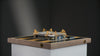
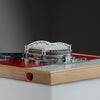
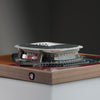
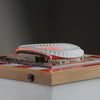
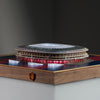
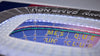
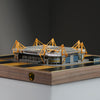
Signal Iduna Park in miniature
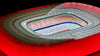
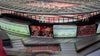
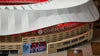
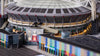
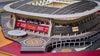
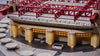
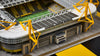
For our model the challenge was to show how steep the stands are. We rebuilt every tier, the yellow pylons and the black-and-yellow colours of the Yellow Wall. With the mini-LEDs on, it looks like a Friday night under the floodlights in Dortmund.